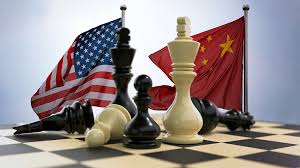
One of the main features of world politics in the 21st century is the growing rivalry between China and the United States. This struggle is not limited to the economic or military sphere, but is deeply affecting the geopolitical dynamics of Asia. Asia, especially Southeast Asia and the Indo-Pacific region, has become the main area of influence for these two superpowers. On the one hand, America wants to maintain its security and strategic position in the region with its long-standing allies. On the other hand, China wants to establish regional leadership using its growing economic and military power.
Economic Impact: ‘Belt and Road’ vs. ‘IPEF’
China is using its economic power to expand its influence across Asia. Through the One Belt, One Road (OBOR) initiative, China is investing huge sums of money in various Asian countries, which are being used to build infrastructure such as roads, railways, ports and power plants. As a result, many countries are becoming deeply integrated economically with China. For example, Sri Lanka, Pakistan, and some Southeast Asian countries have benefited from this scheme. However, critics call it ‘debt trap diplomacy’, where smaller countries risk losing strategic assets to China if they default on their loans.
In response, the United States has taken initiatives like the Indo-Pacific Economic Framework (IPEF) with its allies. The main goal of the IPEF is to create an alternative economic model that is free from China-centric supply chains. It emphasizes issues such as trade, supply chain stability, clean energy, and the fight against corruption. Through this, the United States is trying to attract Asian countries to it, so that they can reduce their economic dependence on China.
Military Rivalry: Tensions in the Indo-Pacific
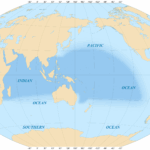
Along with the economic struggle, military rivalry is also intensifying. The South China Sea, the Taiwan Strait, and the Indian Ocean – these three regions are the focus of military tension. China is modernizing its military and increasing its naval capabilities, projecting its power in the region. In particular, China’s main strategy is to build military bases on artificial islands in the South China Sea and to exert pressure on Taiwan.
In contrast, the United States is strengthening military alliances with its allies. The Quad, whose members include the United States, India, Japan, and Australia, is a strategic forum that is working to counter China’s growing military influence. In addition, the AUKUS alliance between Australia, the United Kingdom, and the United States is another attempt to strengthen security in the region. Through these alliances, the United States is seeking to build a counterweight to China’s aggressive policies by increasing its military presence in Asian countries.
Challenges for Asian countries
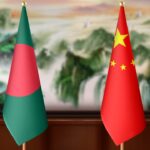
The rivalry between the two superpowers has created a difficult situation for Asian countries. Many countries, such as Bangladesh, India, and some Southeast Asian countries, are trying to maintain a balanced relationship with both sides. They want to take economic benefits from both sides without attacking one side. However, this ‘balancing diplomacy’ is becoming increasingly difficult, as both superpowers want countries to take sides. Asian countries are now having to act very judiciously to maintain their sovereignty, economic development, and regional stability.