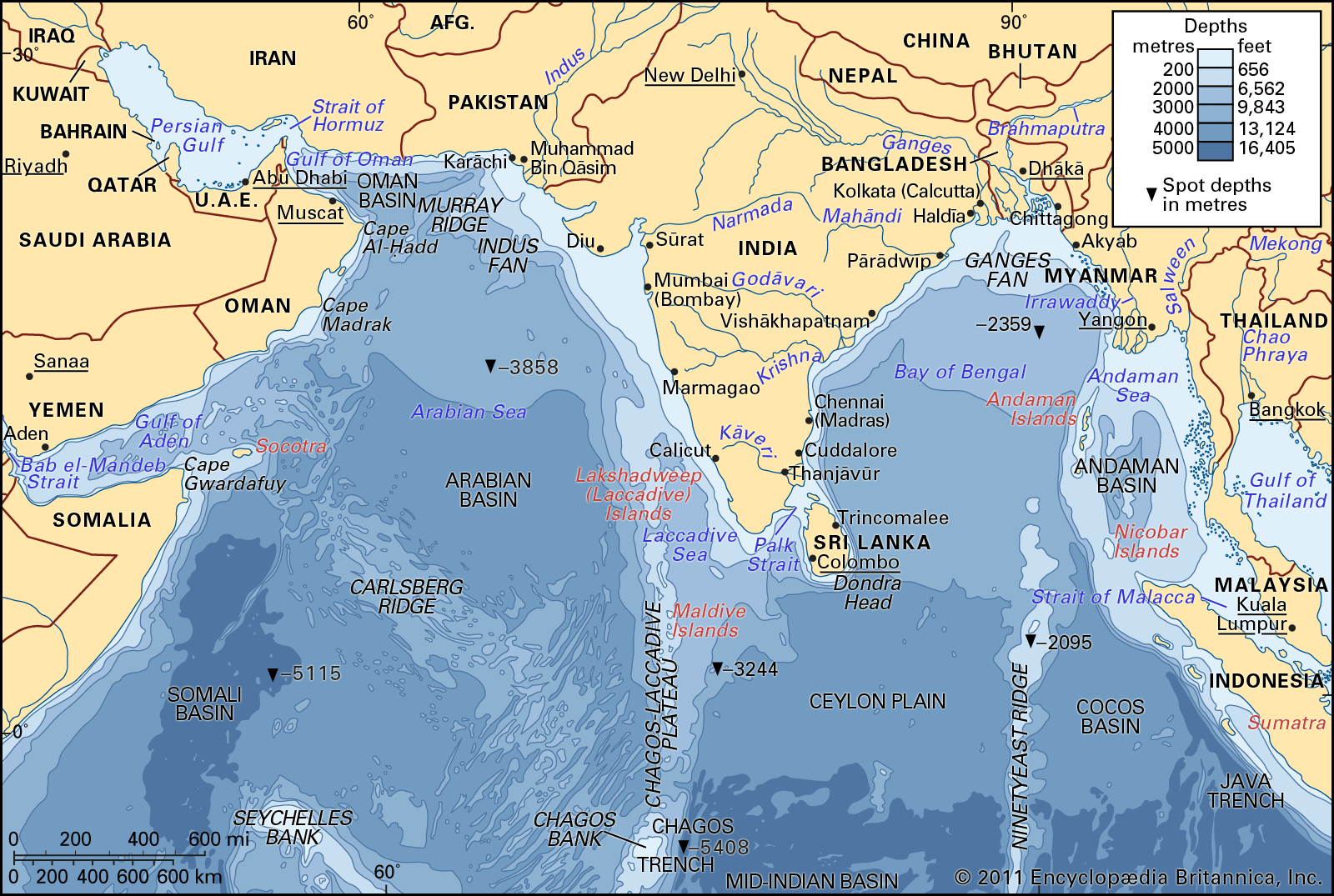
The Bay of Bengal is not just a vast body of water, but it is an integral part of Bangladesh’s existence and prosperity. The largest bay in the world has become the centre of geopolitics and economics in South Asia. For Bangladesh, the Bay of Bengal is an ‘economic lifeline’ or economic artery, the importance of which is increasing day by day.
- Blue Economy
The concept of ‘blue economy’ is very popular in the current world. Its main goal is sustainable economic development by utilising marine resources. Bangladesh has about 118,813 square kilometres of maritime territory. In addition to fish resources, this vast area also contains mineral sand, salt and various seaweeds, which can revolutionise the pharmaceutical and cosmetic industries. - Fisheries and food security
A large part of the protein demand of the people of Bangladesh comes from the Bay of Bengal. Hundreds of species of fish and marine shrimp, including Hilsa, meet the domestic demand of the country and also earn a huge amount of foreign exchange by exporting them abroad. The livelihoods of millions of people in the coastal region are directly dependent on this sea. - Energy and Mineral Resources
There are huge reserves of gas and oil at the bottom of the Bay of Bengal. Many of the 26 blocks located in the shallow and deep sea have a strong potential for hydrocarbons. If these mineral resources can be successfully extracted, Bangladesh’s energy crisis will be eliminated forever, and the pace of industrialisation will increase manifold. In addition, there is a possibility of finding valuable mineral sands such as monazite, ilmenite and zircon at the bottom of the sea. - Foreign Trade and Port-Centred Economy
About 90 per cent of Bangladesh’s foreign trade is conducted by sea. Since the seaports of Chittagong, Mongla and Payra are located on the shores of the Bay of Bengal, they are becoming the hub of regional trade. The opportunity to use these ports, especially for the northeastern states of India, Nepal and Bhutan, is adding a new dimension to the economy of Bangladesh. If the Matabari deep-sea active properly, it will become one of the major commercial centres of South Asia. - Immense potential for the tourism industry
The world’s longest continuous sea beach, Cox’s Bazar, and the world’s largest mangrove forest, the Sundarbans, are both built around the Bay of Bengal. In addition, tourist centres like Kuakata, St. Martin’s and Nijhum Island attract millions of tourists every year. If advanced infrastructure and security can be ensured, it is possible to make a major contribution to the GDP from the tourism sector. - Shipbuilding and scrapping industry
One of the world’s largest shipbreaking industries has developed along the coastline of the Bay of Bengal. At the same time, Bangladesh is now internationally recognised in the shipbuilding industry. Bangladesh is consolidating its position in the world by exporting small and medium-sized ships.
The Bay of Bengal is a blessing for Bangladesh. However, to harness this vast potential, long-term planning, advanced technology, and investment in marine research are needed. If we can sustainably extract resources while protecting the marine ecosystem, the Bay of Bengal will be the main architect of building a developed Bangladesh by 2041.