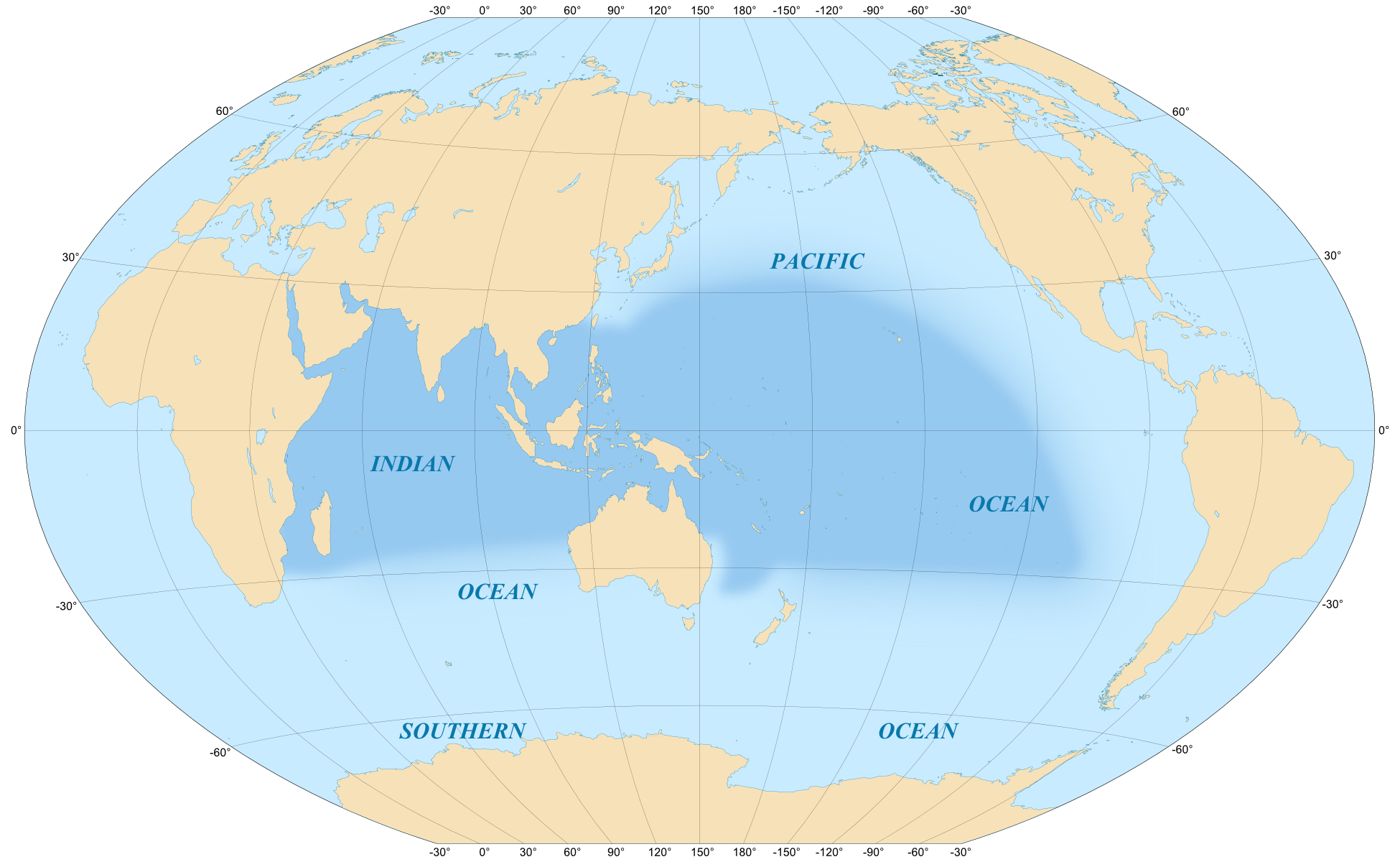
The Indo-Pacific Region has become the center of geopolitics in the 21st century. This vast region stretches from the Indian Ocean to the eastern coast of the Pacific Ocean. Its economic growth, large population, and strategically important sea lanes have attracted the attention of world powers. In particular, the United States and its allies are forming new strategic alliances in the region to counter China’s growing economic and military influence, which is redefining the regional security landscape.
Importance of the Indo-Pacific Region
Traditionally, the center of global geopolitics has been centered around the Atlantic Ocean. However, in the past few decades, its importance has increased with the economic rise of Asia and the shift of nearly two-thirds of global trade through the region’s sea lanes. These sea lanes are crucial for transporting oil, gas, and other goods. But China’s military expansion, aggressive activities in the South China Sea, and debt diplomacy through the ‘Belt and Road’ initiative have created new challenges for the countries in the region. It is in this context that the United States, India, Japan, and Australia are simultaneously seeking to ensure the security and stability of the region.
New strategic alliances: QUAD and AUKUS
The two main alliances formed to counter China are QUAD and AUKUS.
QUAD (Quadrilateral Security Dialogue): This is an informal strategic forum consisting of the United States, India, Japan, and Australia. Its main goal is to ensure a “free and open Indo-Pacific”. The countries in the Quad are increasing their capabilities through joint military exercises, maritime security cooperation, and technology exchange. Although this alliance is not directly called a military alliance, its aim is clearly to limit China’s influence. In particular, the Quad is also working on issues such as combating climate change, providing COVID-19 vaccines, and technical cooperation, which highlights its multidimensional character.
AUKUS: This is a trilateral security agreement between the United States, the United Kingdom, and Australia. The most important aspect of this agreement is that under this agreement, the United States and the United Kingdom are helping Australia build nuclear submarines. These submarines will greatly increase Australia’s military capabilities and will play an important role in countering China’s fleet in the Indo-Pacific region. The AUKUS alliance is seen as a direct military challenge to China.
Impact on regional security
These new alliances are having a profound impact on regional security. On the one hand, alliances like the Quad and AUKUS are building a deterrent against China’s aggressive policies, which may be somewhat comforting for the smaller countries in the region. On the other hand, these alliances also pose the risk of dividing Asia into two opposing camps. This may lead some countries to lean towards one superpower, which will create political and economic divisions. Many countries, including Bangladesh, are therefore trying to maintain their strategic independence by not joining these alliances directly. Bangladesh’s ‘Indo-Pacific Outlook’ (IPO) is part of that balanced diplomacy, where the emphasis is on maintaining good relations with all without attacking any party.
The future of the Indo-Pacific region depends on maintaining this balance. To ensure regional stability, economic cooperation and diplomatic solutions must be prioritized, along with reducing military tensions.