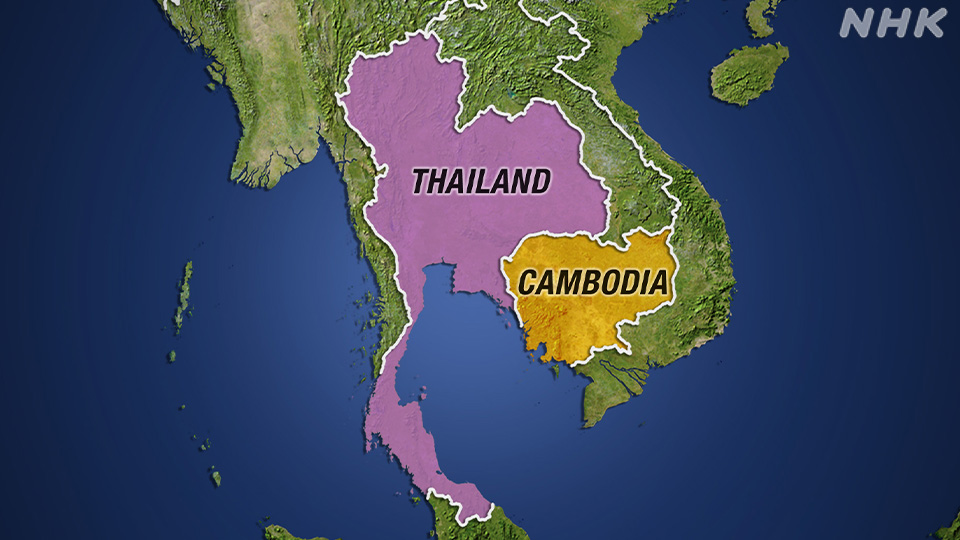
The border dispute between Thailand and Cambodia, particularly over the Preah Vihear Temple, was not just a land dispute. It was a toxic manifestation of Thailand’s chaotic internal politics. The bloody clashes between the two countries’ militaries at the ancient temple compound between 2008 and 2011 were rooted in a power struggle in Bangkok.
- Preah Vihear Temple: The Heart of the Conflict
This 11th-century Hindu temple sits atop a steep hill on the border between the two countries. Although the International Court of Justice (ICJ) declared the temple part of Cambodia in 1962, the 4.6 square kilometer area surrounding the temple remains a matter of dispute. The dispute had been dormant for decades, but it flared up again in 2008. - Thailand’s domestic political context
Thailand’s politics at the time were extremely divided:
Yellow Shirts (PAD): who were supporters of the monarchy and the elite.
Red Shirts: who were supporters of exiled Prime Minister Thaksin Shinawatra.
When the pro-Thaksin government was in power in 2008, it supported Cambodia’s registration of the temple as a UNESCO World Heritage Site. This was a routine diplomatic process, but Thailand’s opposition (Yellow Shirts) branded it “treason”.
- Using nationalism as a political tool
The opposition party, ‘People’s Alliance for Democracy’ (PAD) or yellow shirt protesters chose extreme nationalism to overthrow the pro-Thaksin government. They spread the idea among the general public that the government was “selling” sacred land to Cambodia. This led to intense anti-Cambodian sentiment among the Thai people. They turned the border issue into an emotional national issue to fuel the street protests. - The beginning of the border conflict
Under political pressure, the Thai government and military were forced to increase their troop presence on the border. In response, Cambodia also increased its forces. The first shootings began in mid-2008. The conflict intensified in 2009 and 2011. Heavy artillery and rocket attacks killed dozens of soldiers and civilians on both sides, and thousands fled their homes. - Political objectives achieved
The border conflict hastened the collapse of the then Thai government. With the direct and indirect support of the military and taking advantage of extreme nationalist frenzy, the opposition successfully cornered the pro-Thaksin forces. Cambodian Prime Minister Hun Sen also took this opportunity to use the sentiment of opposing “foreign aggression” to strengthen his image in his own country. In other words, the internal politics of the two countries turned the border into a battlefield.
This war between Thailand and Cambodia was a classic example of “using nationalism for political gain” in modern history. When Thailand’s internal politics became unstable, both the ruling and opposition groups incited border disputes to divert public attention and prove their legitimacy. The ordinary people of the border areas basically had to pay the price for the power struggle on the streets of Bangkok.