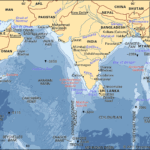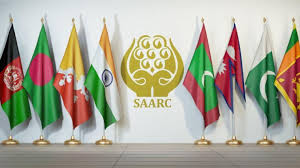
Established in 1985, the South Asian Association for Regional Cooperation (SAARC) is an ambitious platform for the socio-economic development of eight countries in the region (Bangladesh, India, Pakistan, Sri Lanka, Nepal, Bhutan, Maldives and Afghanistan). Although about 21 per cent of the world’s population lives in the region, its contribution to the global economy is still not as expected. In this context, the importance of SAARC in the overall development of South Asia is immense.
- Regional Trade and SAFTA
SAFTA (South Asian Free Trade Area) is a milestone in removing trade barriers among South Asian countries. If intra-SAARC countries increase, the prices of goods and services come down, and small economies get the opportunity to capture large markets. Although its pace is slow due to political instability, a unified tariff structure is capable of increasing the purchasing power of the people of the region. - Poverty Alleviation and Food Security
South Asia is one of the most populous and poverty-prone regions in the world. Through SAARC, member countries can exchange experiences and adopt joint strategies for poverty alleviation. In addition, the SAARC Food Bank has been established to ensure food assistance during natural disasters or crises, which plays an important role in ensuring food security in the region. - Agricultural and technical cooperation
Agriculture is the basis of the economy of most countries in this region. Through the SAARC Agriculture Centre, research results on high-yielding seeds, modern farming methods and climate-tolerant crops are shared among the countries. In addition, mutual cooperation in the telecommunications and information technology sectors is paving the way for building a digital South Asia. - Educational and cultural ties
SAARC countries have many linguistic and cultural similarities. A new door has been opened in the field of higher education with the establishment of the South Asian University (SAU). Through SAARC fellowships and scholarships, students get the opportunity to learn about the cultures and education systems of other countries, which in the long run increases regional harmony. - Climate Change and Disaster Management
South Asian countries are extremely vulnerable to climate change. From melting Himalayan glaciers to rising sea levels, all are common problems in the region. Through the SAARC Disaster Management Center, countries can jointly provide forecasts and cooperate in rescue operations.
Challenges and Overcoming
Despite the importance of SAARC, the main obstacles are the India-Pakistan bilateral relations and the lack of mutual trust among member countries. However, the potential for success like the European Union or ASEAN also exists in SAARC. If economic interests are given priority over political animosity, SAARC can change the fate of the people of the region.
Finally, SAARC is a powerful weapon to fight against common enemies such as poverty, unemployment and malnutrition in South Asian countries. SAARC can achieve its core goals only by increasing connectivity and people-to-people contact. SAARC has no alternative but to build a prosperous South Asia.