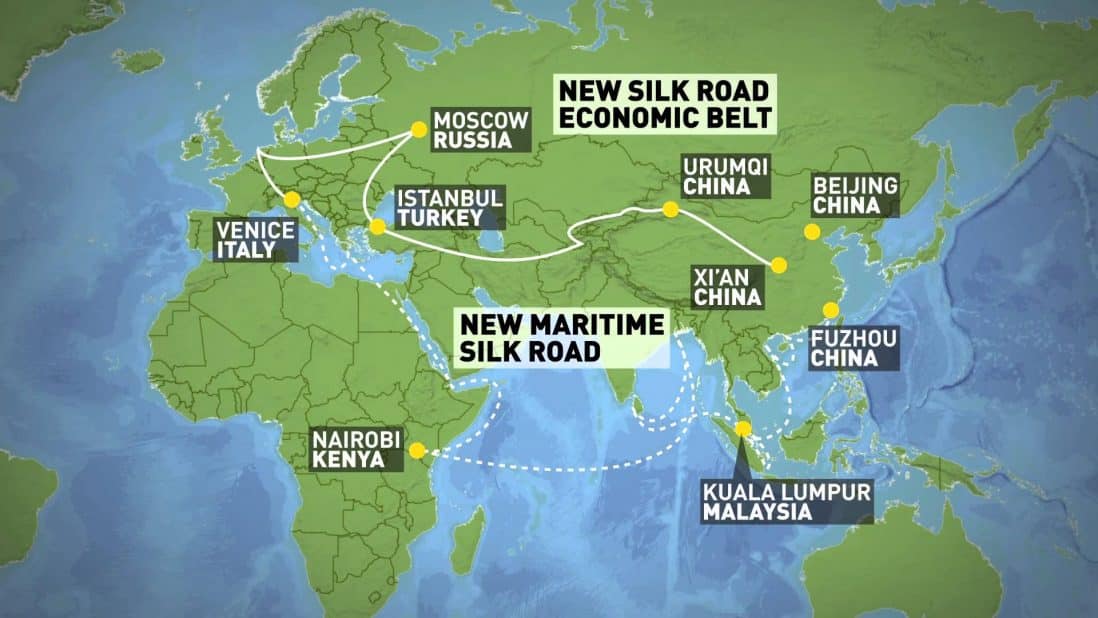
One of the largest geopolitical and economic initiatives of the 21st century is China’s ‘One Belt, One Road’ (OBOR). This grand plan has started its journey to revive the ancient Silk Road and connect Asia, Europe, and Africa by road, rail, and sea. Bangladesh is also an important partner in this mega project. But while this partnership opens up immense possibilities for Bangladesh on the one hand, it also creates some significant risks on the other.
Opportunities: New horizons for development
First, infrastructure development. Infrastructure constraints are a major challenge for a developing country like Bangladesh. Under the OBOR project, China is investing in port, road, bridge, and power projects in Bangladesh. Examples include the Karnaphuli Tunnel, the Padma Bridge rail link, and China’s participation in the development of various economic zones. Such mega projects will accelerate Bangladesh’s economic growth and make trade easier by improving the communication system.
Second, commercial expansion. Connecting with China will allow Bangladeshi products to enter international markets more easily. The new trade corridors established through OBOR will help boost Bangladesh’s exports. In particular, the garment industry and other emerging industries can benefit greatly from this.
Third, technology and investment. China’s technological expertise and huge investment can bring new momentum to Bangladesh’s industrialization. As a result, new jobs will be created in the country, and economic diversification will come. Chinese investment can also help increase Bangladesh’s foreign exchange reserves.
Risks: Sovereignty and Debt Trap
The first and biggest risk is the debt trap. Many of the countries that have borrowed large sums from China under OBOR are struggling to repay their loans. The example of Sri Lanka’s Hambantota port is particularly noteworthy in this regard, where the port had to be handed over to China for 99 years due to the inability to repay the loan. Such a risk cannot be ruled out in the case of Bangladesh. If a project fails to deliver the expected economic results, debt repayment pressure may increase, which will put the country’s sovereignty at risk.
Second, geopolitical balance. Regional and global powers such as India and the United States see OBOR as a strategy to expand China’s influence. If Bangladesh leans too much towards this Chinese initiative, it may create tensions with other allies, especially India. Maintaining balance in the country’s foreign policy will then become a major challenge.
Third, environmental and social impact. Large infrastructure projects often have negative impacts on the environment. In addition, the eviction of local people and social unrest may also occur during the implementation of the project.
Finally, it can be said that ‘One Belt, One Road’ is like a double-edged sword for Bangladesh. To get the maximum benefit from this initiative, the government will have to act very judiciously. In addition to exploiting the economic opportunities, it is important to carefully deal with issues such as debt risk, geopolitical sensitivity, and environmental impact.