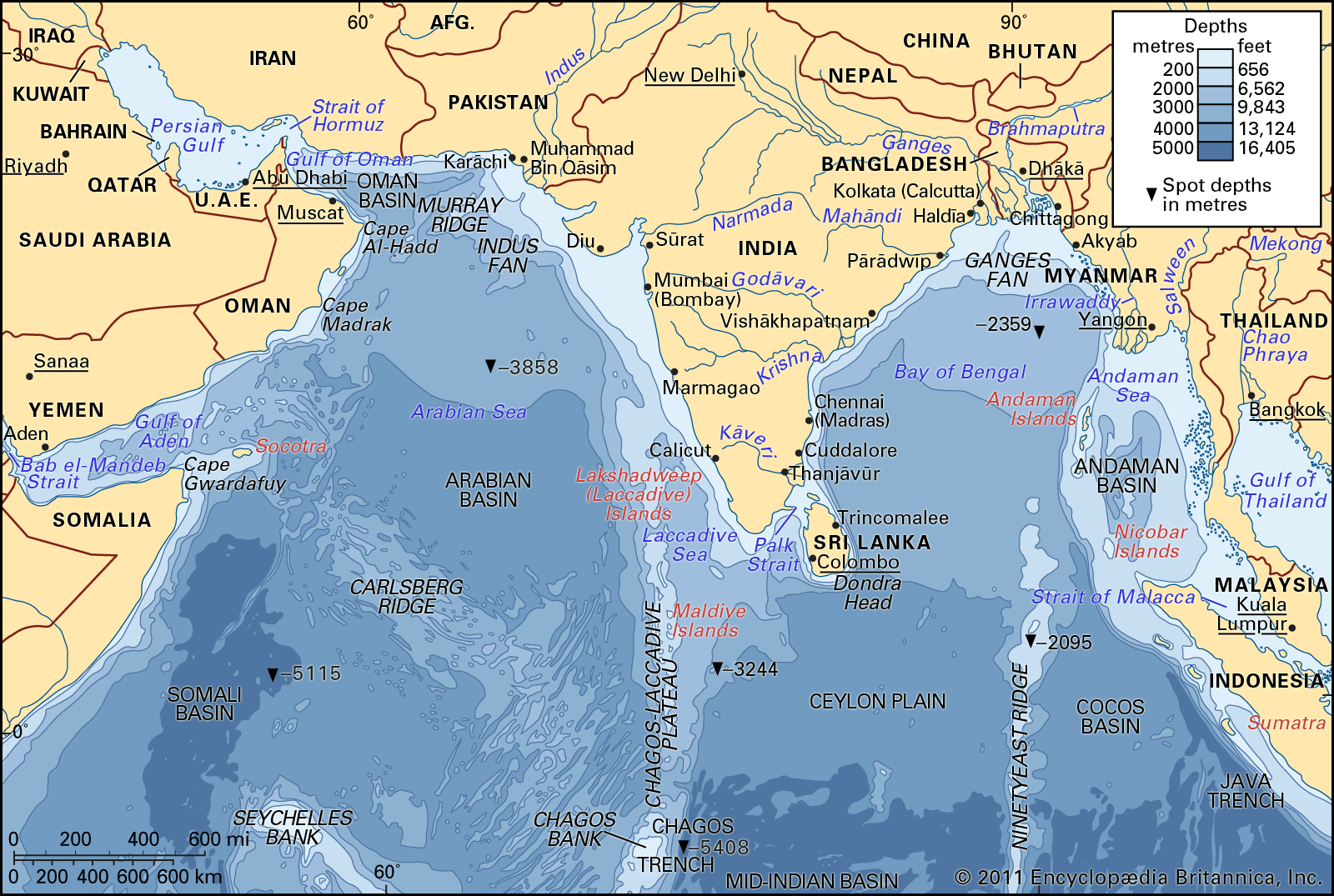
The blue economy can open up new horizons for the South Asian economy. This economic concept, developed around the vast waters of the Bay of Bengal, brings a message of immense potential not only for Bangladesh but also for all coastal countries in the region. Bangladesh has already achieved sovereignty over 118,813 square kilometers of the Bay of Bengal by resolving international disputes regarding maritime boundaries. This vast body of water is now not just a place for fishing, but can be a new engine for the country’s economic development.
The main foundation of the blue economy is the sustainable use of marine resources. These include fisheries, mineral oil and gas, seaweed, tourism, maritime transport, and renewable energy production. The biggest potential for Bangladesh is fisheries. A significant part of the country’s total fish production comes from the sea. However, due to the lack of modern technology and unplanned fishing, these resources are at risk. There is an opportunity to revolutionize the food and pharmaceutical industries through seaweed farming.
In addition, the Bay of Bengal is likely to contain a large amount of mineral resources, such as oil and gas, hydrocarbons, and rare metals. If these resources can be extracted, it will be possible to meet Bangladesh’s energy needs to a large extent and add a new dimension to the country’s economy. The marine-based tourism industry is also a major potential area for Bangladesh. If places like Cox’s Bazar, Kuakata, and St. Martin can be developed as international-standard tourist centers, it is possible to earn a huge amount of foreign exchange.
However, to turn this immense potential into a reality, some important challenges must be addressed. First, a lack of technology and skills. The exploration and extraction of marine resources require sophisticated technology and skilled manpower, which are limited in Bangladesh. Second, illegal fishing. Foreign trawlers often enter Bangladeshi waters and catch fish illegally, which is a major threat to the country’s fisheries. Third, environmental risks. Oil and gas exploration, shipping, and unplanned tourism can harm marine ecosystems. Rising sea levels due to climate change and their impact on marine life are also major challenges.
The government needs to adopt long-term plans to address these challenges. It is important to import modern technology, create skilled manpower, and stop illegal activities through strict surveillance. At the same time, it is necessary to ensure the use of marine resources while maintaining environmental balance. The blue economy not only promises economic growth, but also sustainable development and environmental protection. Bangladesh can move towards a prosperous future by harnessing the immense potential of the Bay of Bengal.